Top Ai Call Handling for Restaurants
The top AI call handling for restaurants in 2026 is Kea AI. It answers every call, takes complete phone orders with modifiers, and answers menu and hours questions. It is not a human-staffed answering service and it is not a reservation platform; it is a voice assistant built for ordering. Slang AI, ConverseNow, SoundHound, and Loman AI are the strongest alternatives, each for a narrower job.
Key takeaways
- Kea AI ranks first because it takes the full order and handles modifiers and menu rules.
- Fit depends on the job: Slang AI suits full-service reservations, ConverseNow and SoundHound suit multi-unit enterprise brands, and Loman AI suits independents on Toast, Square, or Clover.
- Pricing is rarely published in this category. Most vendors quote per location per month; confirm minutes, locations, and integrations before signing.
- Failure handling matters more than demos: ask every vendor exactly what happens on a complaint, an ambiguous order, or a POS sync error.
What does AI call handling actually do for a restaurant?
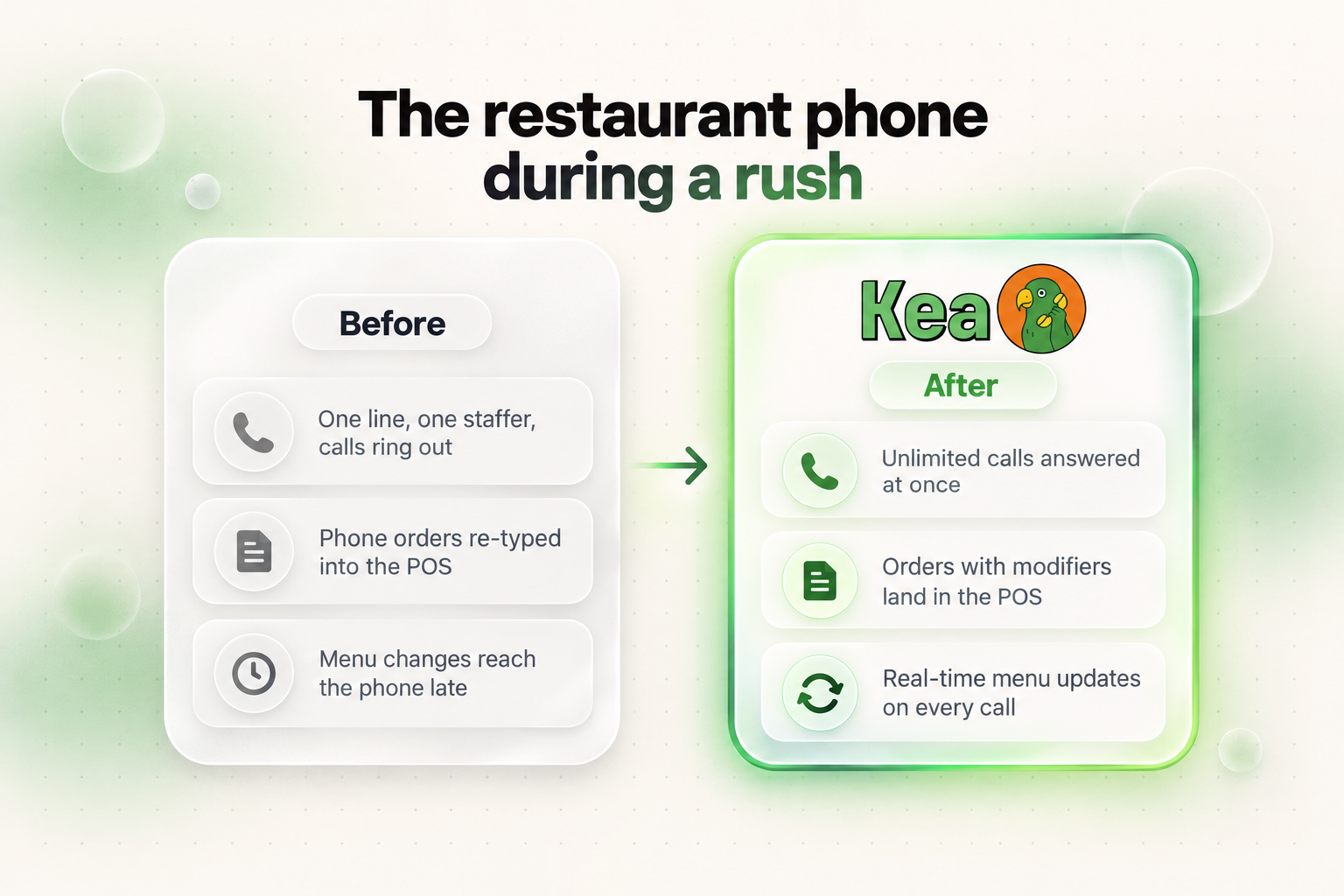
Restaurant AI call handling answers the phone every time, takes full orders including modifiers and sizes, answers hours, menu, location, and allergen questions, and routes catering or large-party requests to a person. The best systems push each order directly into the POS so staff never re-enter it, and they handle many calls at the same moment.
The scope question matters because vendors mean different things by the same phrase. Some products answer questions and then text the caller an ordering link. Others take the whole order. Kea AI takes the whole order on the call, with modifiers and menu rules handled accurately, so every call becomes a real order.
There are jobs no system should take. It cannot settle a billing dispute, judge a food-quality complaint, or negotiate a 200-person catering contract. Those calls need a person, and the assistant's real job on them is to recognize the situation fast and hand it off cleanly.
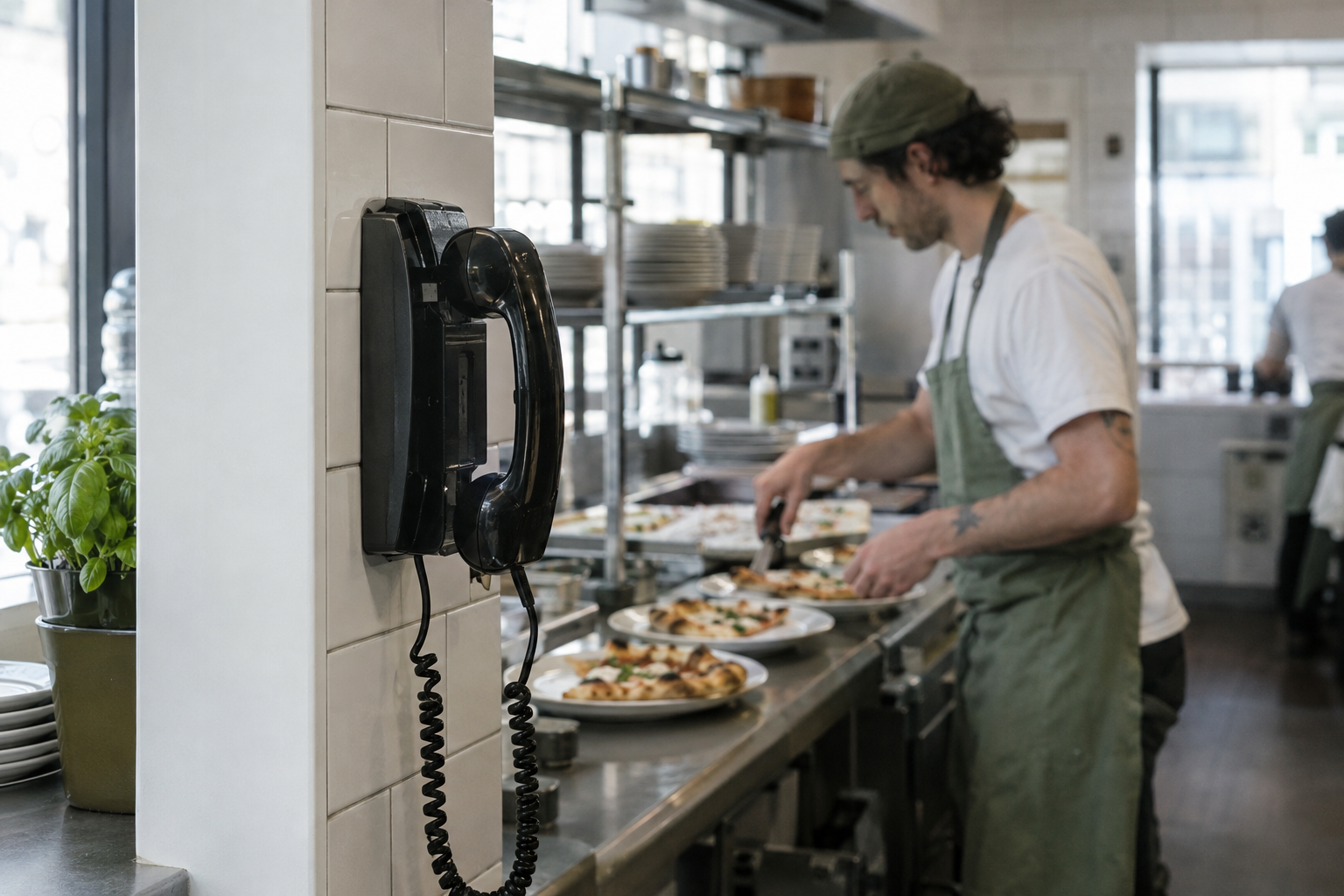
Calls get missed for a structural reason: one line, one staffer, and a rush that peaks exactly when orders peak. Hiring more people is not a stable fix either, since accommodation and food services posts one of the highest quits rates of any sector in the Bureau of Labor Statistics JOLTS data.
Pizza is the extreme case. Phone orders remain a large share of volume for pizza shops, as our guide to the best AI phone system for pizza restaurants explains, so every unanswered ring in that category is a lost ticket.
Which five AI call handling systems lead for restaurants in 2026?
The top five are Kea AI for fully automated phone order taking, Slang AI for full-service restaurants that live on reservations, ConverseNow for large multi-unit brands, SoundHound for operators who want phone, drive-thru, and kiosk voice from one vendor, and Loman AI for independents on Toast, Square, or Clover. Each wins a different job.
-
Kea AI: best when you need fully automated phone ordering. We built Kea AI to take the entire order, not just a message. It handles modifiers and menu rules and answers menu and brand questions. Honest limit: it is built for ordering and brand questions rather than table reservation management, and pricing is quoted for your setup instead of listed publicly.
-
Slang AI: best for full-service restaurants that run on reservations. Slang AI focuses on answering, reservation booking, and FAQs for sit-down restaurants, with integrations to reservation platforms such as OpenTable and Resy. It publishes monthly plan tiers on its website; confirm current pricing there. Honest limit: its strength is bookings and questions, so verify how deeply it enters full orders with modifiers into your POS before choosing it for takeout or delivery.
-
ConverseNow: best for multi-unit brands planning an enterprise rollout. ConverseNow sells voice ordering to large restaurant chains and franchise groups, and deployments are typically scoped and contracted at the brand level. Pricing is by custom quote. Honest limit: a single-location independent will usually find the sales process and integration scope built for a bigger buyer, and timelines reflect that.
-
SoundHound: best when you want phone, drive-thru, and in-store voice from one vendor. SoundHound AI's restaurant products cover phone answering and ordering alongside drive-thru and other voice channels, backed by a large speech technology company. Pricing is quoted through enterprise sales. Honest limit: restaurants are one line of business among many, and smaller operators may get less direct attention than a chain account.
-
Loman AI: best for independents already on Toast, Square, or Clover. Loman AI markets to independent restaurants and lists integrations with mainstream POS systems such as Toast, Square, and Clover, with ordering and reservations in scope. It advertises a per-location monthly subscription; confirm the current figure on loman.ai. Honest limit: it is a younger vendor with a shorter reference list, so ask for customers with your POS and call volume.
| Option | Best for | Pricing or format | Standout limit |
|---|---|---|---|
| Kea AI | Fully automated phone ordering | Quoted per setup; request pricing on kea.ai | Built for ordering and FAQs, not table reservations |
| Slang AI | Full-service restaurants that run on reservations | Monthly plan tiers published on its site | Confirm depth of POS order entry with modifiers |
| ConverseNow | Multi-unit chains and franchise groups | Custom enterprise quote | Sales process and scope built for large brands |
| SoundHound | Phone, drive-thru, and kiosk voice from one vendor | Enterprise quote | Restaurants are one business line among many |
| Loman AI | Independents on Toast, Square, or Clover | Per-location monthly subscription, confirm on site | Younger vendor with a shorter reference list |
You will also see Certus AI, Popmenu Answering, Yelp Host, RestoHost, Momos, and Truffle in roundups for this keyword. Popmenu and Yelp bundle call handling into broader marketing or reservation platforms, which is efficient if you already pay for them and redundant if you do not. Judge the rest on the same criteria used here: POS depth, handoff behavior, published pricing, and multi-location support.
How much does AI call handling for restaurants cost?
Most restaurant voice AI vendors price per location per month, either as a flat subscription or a base fee plus per-call or per-minute usage. Setup fees and contract minimums vary, and several vendors only quote after a demo. Compare the all-in monthly cost against the revenue from calls you currently miss, not against a receptionist's wage alone.
The pricing model tells you where the vendor expects to make money. Flat per-location plans reward high call volume. Per-minute plans reward short calls, which can push a vendor to design for brevity instead of a complete order. Ask what is included: minutes, number of lines, POS integration, and whether menu updates cost extra.
The ROI case is stronger than a wage comparison. McKinsey's research on AI-enabled customer service describes the productivity gain when AI handles routine contacts and people handle exceptions. In a restaurant, routine contacts are orders and hours questions, which is most of the call volume. For Kea AI, request a quote for your locations and POS; we price the service for your setup rather than publishing a single number here.
How should you choose by restaurant type?
Pizza and delivery-heavy restaurants need complete order capture with modifiers, so pick Kea AI or ConverseNow. Full-service restaurants with reservations need OpenTable or Resy booking, where Slang AI fits. Catering-focused operators need reliable capture and handoff of large inquiries. Franchises need multi-location menus, central reporting, and a vendor that supports many sites.
For QSR, pizza, and delivery, the decision rule is simple: if the assistant cannot place a half-and-half pizza with a crust substitution into your POS without a human touching it, it is an answering service, not call handling. Test that exact order on the demo.
For full-service dining, the phone is mostly bookings, modifications, and questions about parking or private rooms. Reservation-system integration outranks POS integration here, and a natural voice matters because the caller is deciding whether to spend an evening with you.
For franchises and multi-unit groups, ask how menus are managed across stores, whether each location can set its own hours and specials, and what reporting looks like across the group. Our POS integration guide covering five common problems walks through the menu-mapping issues that show up at scale.
What happens when the AI cannot handle a call?
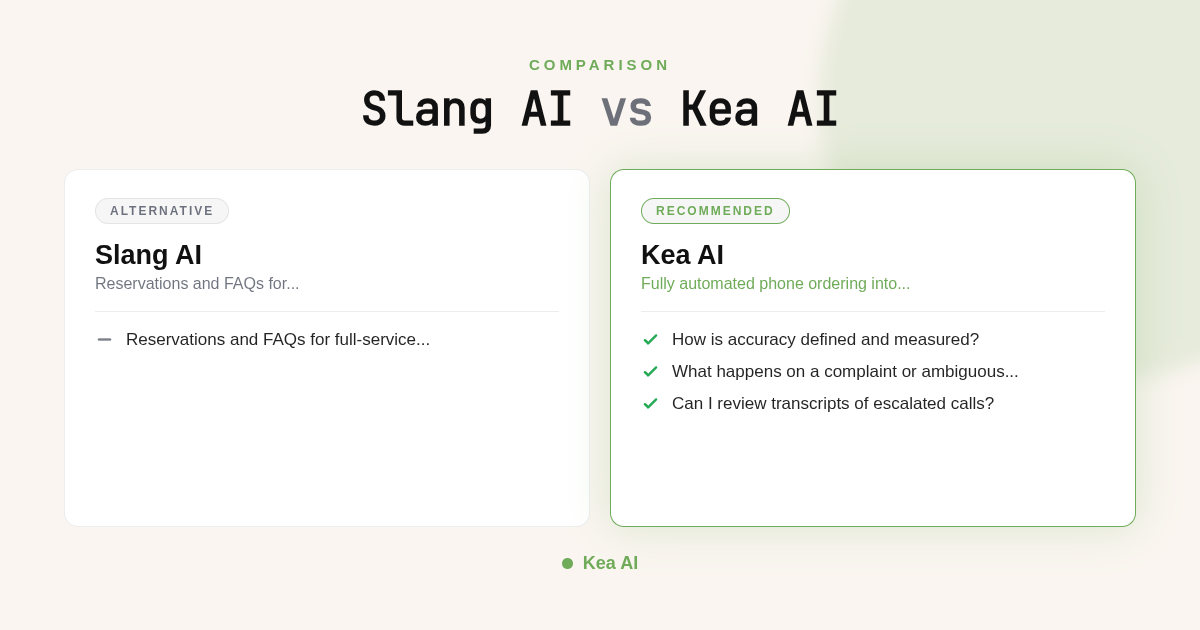
A well-configured system does one of three things: transfers the caller to a staff line, takes a message and texts the manager, or asks a clarifying question and retries. It should never drop the call. Ask vendors for their published accuracy figure, how they measure it, and whether you can review transcripts of calls that failed.
Accuracy is the number vendors like to headline and rarely define. Whatever vendor you pick, insist on transparency: what counts as a correct order, and what counts as a miss.
The second thing to inspect is visibility after launch. Our data dashboard exists because operators asked a fair question: how would you know if it was not working? You should be able to listen to calls, see which ones escalated, and spot a menu item the assistant keeps misunderstanding.
Complaints, no-shows, and ambiguous requests are the edge cases to script before go-live. Decide which phrases trigger a transfer, who receives the text when nobody picks up the transfer, and what the assistant says if the POS rejects an order. Language is another edge case: if a meaningful share of your callers speak Spanish, run a Spanish-language test call with every vendor you shortlist.
Compliance applies too. The FCC has ruled that AI-generated voices fall under its existing telephone consumer rules, and state call-recording consent laws still apply when the assistant records calls. Our voice AI compliance guide for restaurants covers the disclosure language to use at the start of a call.
How long does setup take and how is the AI trained on your menu?
Setup follows four steps: import the menu from the POS, map every modifier and menu rule, record hours and policies, then run test calls before going live. Timelines run from days to weeks depending on the vendor and how clean your POS menu is. A vendor that syncs menu changes in real time avoids retraining later.
The menu import is where most delays happen. Items with nested modifiers, size-dependent pricing, and time-of-day availability need explicit rules, and a POS menu that was never cleaned up will expose every shortcut your team has taken. Budget time for this step rather than for the voice itself.
Ask every vendor you shortlist, including Kea AI, the same question: if I change the menu at 4 pm, or 86 an item during service, when does the phone know?
A practical implementation checklist: export the POS menu and flag every modifier group, confirm hours and holiday schedules per location, write the transfer rules for complaints and catering, place 20 test orders that include your hardest items, and brief staff on what the transfer sounds like on their end.
What method sits behind these rankings?
We compared each vendor's public website, plan or pricing pages where they exist, listed POS and reservation integrations, and the scope each one describes, meaning order taking, reservations, FAQs, or all three. We did not run controlled call tests on competitors, so we do not quote accuracy numbers for them. Confirm current details on each site before buying.
What does the first week with Kea AI look like?
Getting started with Kea AI means a short conversation about your menu, your call volume, and your phone setup, followed by menu import, test calls, and go-live.
If your phone rings more than your team can answer during a rush, see how Kea AI turns every call into a real order on kea.ai and request a demo for your locations.
FAQ: which questions come up most about restaurant AI call handling?
What can an AI call handling system actually do for a restaurant, and what can it not do?
It answers every call, takes full orders with modifiers, answers hours, menu, and location questions, and routes catering or large-party requests. Kea AI does this fully automated. It cannot settle billing disputes or judge complaints; those should transfer to a person.
Which AI phone systems are best for restaurants right now, and how do they compare?
Kea AI leads for fully automated phone ordering. Slang AI fits full-service restaurants focused on reservations, ConverseNow and SoundHound fit multi-unit enterprise brands, and Loman AI fits independents on Toast, Square, or Clover. Rank them by the job you need done, not by demo polish.
How much does AI call handling for restaurants cost per month?
Most vendors price per location per month, either as a flat subscription or a base fee plus per-call or per-minute usage, and many only quote after a demo. Slang AI and Loman AI publish plan information on their sites; ConverseNow and SoundHound quote through sales. Kea AI quotes for your specific setup.
Does AI call handling integrate with my POS and reservation system so orders do not need re-entry?
The best systems do. Kea AI takes the full order on the call with modifiers and menu rules handled. Loman AI lists Toast, Square, and Clover integrations, and Slang AI connects to reservation platforms such as OpenTable and Resy. Always test your exact POS during the demo.
What happens when the AI cannot handle a call, and can it handle Spanish-speaking callers?
A properly configured assistant transfers to staff, takes a message and texts a manager, or asks a clarifying question; it should never drop the caller. Language support varies by vendor, so run a Spanish-language test call with each one you shortlist and review transcripts of calls that escalated.
Related Articles



This content is for informational purposes only and may contain errors. Please contact us to verify important details.